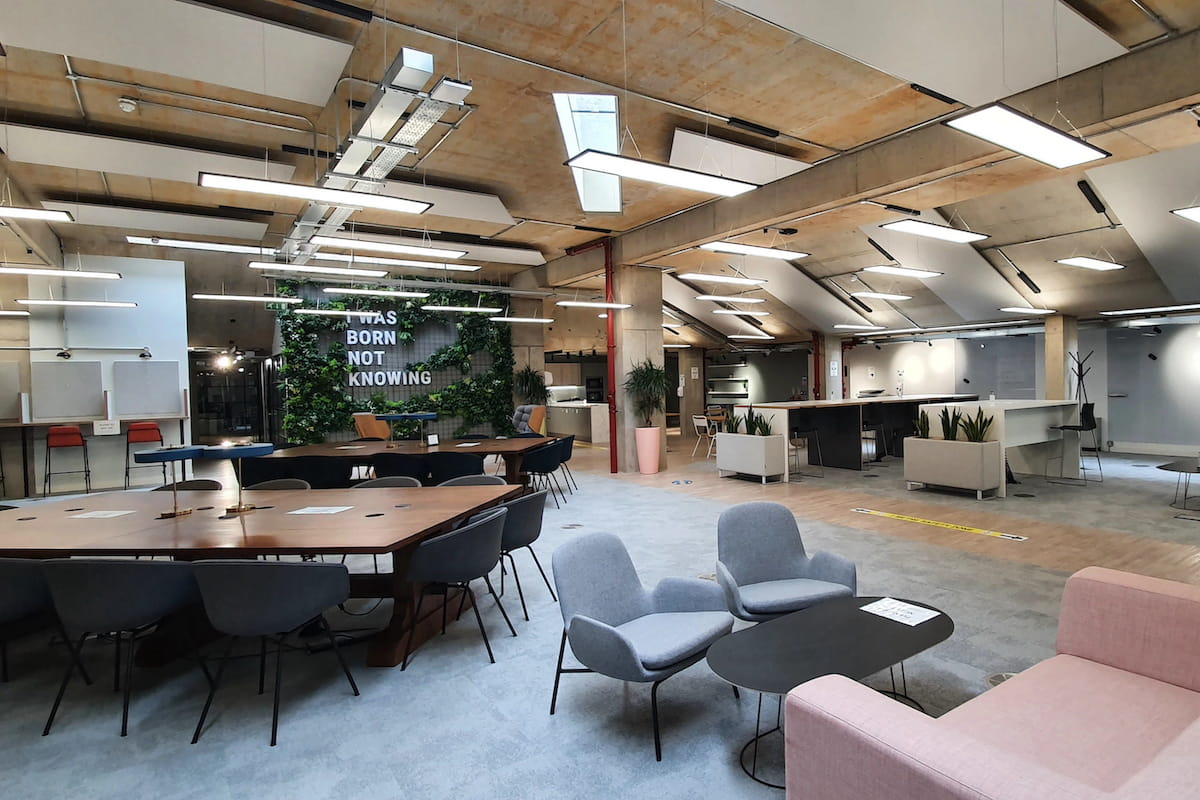
Not sure where to start with an Oxford office search?
Follow this practical process to set your brief, budget, team size, preferred areas, shortlist, viewings and negotiation.
Finding an office in Oxford is easier once you stop trying to compare every available building at once.
The city has central serviced offices, suburban business parks, coworking spaces, managed offices and specialist science and innovation environments.
That creates plenty of choice, but also plenty of questions:
Which Oxford areas should we shortlist?
How much should we spend?
Does a startup need a private office?
Should we be in the city centre or near a science cluster?
Which providers should we contact?
The most effective approach is to write the office brief before looking at individual spaces.
Start with your team and budget. Decide where employees need to travel from. Identify which facilities are essential. Then narrow the market to a handful of offices that genuinely fit.
Oxford Offices has helped more than 10,000 businesses find workspace and says 92% of clients secure a space within four weeks. Its search service is free to businesses.
Start your Oxford office search

Step 1: Start with why you need an office
Before choosing Summertown or Oxford Business Park, ask what the office actually needs to do.
Are you looking because:
- the team has outgrown remote working?
- clients need somewhere to meet?
- you need a professional Oxford base?
- you have just raised investment?
- your current office is too small?
- you need to be near research or university activity?
- employees need somewhere to collaborate?
- you are moving from another city?
- the current lease is ending?
A five-person startup may need flexibility and affordability.
A 40-person science company may need secure space, specialist facilities and a long-term growth plan.
Those are very different office searches.
Step 2: Work out how many people actually need desks
Do not assume one permanent desk per employee.
Ask:
How many people will be in the office on the busiest normal day?
Oxford’s small-office market is particularly useful for teams of two to ten, including startups and spinouts that want flexibility without committing to a large traditional lease.
A useful starting point
1–5 people
Coworking or a small private office.
6–10 people
Private serviced space usually becomes more practical.
11–20 people
Prioritise meeting rooms and team privacy.
20–50 people
Compare serviced and managed workspace.
50+ people
Consider larger managed suites and traditional leases.
Then look at growth.
If a six-person company expects to become ten people shortly, do not choose a space that is already full on move-in day.
Step 3: Set your budget
Around £400 per desk per month is a useful 2026 Oxford planning benchmark.
Most mainstream flexible offices sit between approximately £250 and £550 per desk, with premium options reaching £500–£650+ depending on area and specification.
At the £400 benchmark:
5 people = around £2,000 per month
10 people = around £4,000 per month
20 people = around £8,000 per month
50 people = around £20,000 per month
These are planning figures rather than fixed prices.
Step 4: Choose two or three Oxford areas
Oxford City Centre
Useful for client-facing companies, professional services and businesses that value central amenities.
Summertown
A premium location with high-quality office stock and strong professional appeal.
Botley and West Oxford
Often stronger value than the city’s premium districts.
Oxford Business Park and Littlemore
Modern workspace, good road access and relatively competitive pricing.
Cowley and East Oxford
A broad business area with flexible workspace and good access to eastern Oxford.
Headington
Particularly relevant to healthcare, science and medical businesses.
Oxford Science Park
Strong for technology and research-led organisations.
Oxford North and Begbroke
Increasingly important for science, technology, innovation and university spinouts.
Current Oxford planning rates range from approximately £290 per desk around Botley, £340 around Oxford Business Park, £350 in the city centre, £415 around Cowley and approximately £500 around Summertown and Headington.
Should you choose the cheapest Oxford location?
Not automatically.
Botley may save a significant amount compared with Summertown.
For a 20-person team, Oxford’s current indicative rates suggest a difference of roughly £4,200 per month between £290-per-desk Botley and £500-per-desk Summertown.
But cost is only one consideration.
If a more expensive location improves staff recruitment, travel, client access or research connections, the premium may make sense.
Make the decision deliberately rather than choosing the cheapest or most prestigious postcode by default.
Step 5: Make a must-have list
Think about:
- private office
- desks
- meeting rooms
- 24/7 access
- phone booths
- parking
- bike storage
- showers
- natural light
- reception
- branding
- privacy
- specialist IT
- research proximity
- growth options.
Divide these into must-have and nice-to-have requirements.

Step 6: Decide what type of office you need
Coworking
Good for founders, solo workers and small hybrid teams.
Serviced office
Private, furnished and ready to use.
Often the most straightforward route for growing businesses.
Managed office
More private and customisable, with greater control over layout and branding.
Traditional lease
More responsibility and commitment, but complete control over the workplace.
Read Serviced vs Managed vs Coworking vs Traditional Lease: Oxford Office Guide for the full comparison.
Step 7: Write your office brief
Example Oxford brief
Team size: 10
Growth: 12–14 within a year
Preferred areas: City Centre, Botley or Oxford Business Park
Budget: £4,500 per month
Move-in: Within two months
Term: 12 months
Type: Serviced private office
Must have: Meeting rooms, parking and phone booths
Nice to have: Showers and bike storage
Clients: Regular meetings in Oxford
Growth: Larger suite available if needed
This turns an open-ended search into something much more focused.
Where Oxford Offices helps
Oxford Offices can take the brief and shortlist suitable spaces.
Its published process is Tell, Explore, Tour and Secure: share the requirement, receive a shortlist, tour the spaces and get support with negotiation.
The service is free to businesses because office providers pay after a successful match.
Oxford Office Search & Broker Service
Step 8: Build a shortlist of three to five offices
Compare:
- monthly cost
- team size
- area
- commute
- minimum term
- deposit
- meeting rooms
- parking
- phone booths
- 24/7 access
- furniture
- showers
- bike storage
- branding
- future growth
- move-in date.
Three to five strong options are usually easier to evaluate than a long list.
Which providers should I shortlist?
Do not choose a provider before defining the brief.
Oxford has everything from low-cost flexible offices to specialist innovation workspace.
The right operator depends on your team.
Ask:
Which providers currently have offices that match our size, budget, location and working pattern?
That is much more useful than asking which Oxford provider is “best” overall.
Step 9: View the offices properly
Ask:
Does the commute work?
Will the team fit comfortably?
Are meeting rooms actually available?
Is there enough privacy?
Is parking guaranteed or simply nearby?
Where will calls happen?
Can the business expand?
Does the location help with clients, recruitment or research connections?
Where possible, view the actual office you would occupy.
Step 10: Compare the real monthly cost
Do not compare the desk rate in isolation.
Add:
- meeting-room fees
- parking
- printing
- storage
- dedicated internet
- extra furniture
- deposits.
Oxford Offices says most flexible options include furniture, IT infrastructure, utilities, maintenance, cleaning and kitchen access, but facilities such as meeting rooms can vary between buildings.
Step 11: Negotiate
Potential areas for negotiation include:
- price
- deposit
- meeting-room allowance
- contract length
- rent-free period
- furniture
- parking
- brandingmove-in timing.
Oxford Offices reports average negotiated savings of around 20% on prime Oxford locations, although individual deals vary.
Step 12: Check the contract
Confirm:
- monthly payment
- VAT
- deposit
- start date
- term
- notice
- renewal
- facilities
- extra charges
- access
- growth options
- exit responsibilities.
Take legal advice where appropriate for longer managed or leased agreements.
Step 13: Prepare for move-in
Confirm:
- access cards
- IT
- postal arrangements
- equipment
- meeting-room booking
- signage
- guest access
- insurance.
Serviced and plug-and-play space can significantly reduce the physical setup required.
Common mistakes when searching for an Oxford office
Starting without a budget
Know what the company can comfortably spend first.
Choosing the area before considering the team
The most impressive address may not produce the best employee commute.
Assuming all Oxford businesses need an innovation cluster
Only pay the premium when it benefits the company.
Searching by total headcount
Use actual attendance.
Comparing only desk prices
Always compare inclusions.
Ignoring parking
This can materially affect some Oxford teams.
Taking too much space for future growth
Choose flexibility where possible.
Leaving the search too late
Allow time for comparison and negotiation.
Start your Oxford office search
A successful office search starts with the brief, not the building.
Define your team.
Set the budget.
Choose two or three areas.
Decide which facilities really matter.
Then compare a small number of suitable offices.
If you would rather have someone search the market on your behalf, Oxford Offices can help with the shortlist, tours and negotiation.
Start your Oxford office search
For further reading, explore Oxford Office Search & Broker Service, Office Space to Rent in Oxford, the Oxford Office Cost & Price Index 2026 and the Oxford Team-Size Office Hub.